
Exploring the World of Sativa, Indica, and Hybrid Strains
Cannabis has been cultivated for thousands of years, leading to distinct varieties with unique characteristics and effects. While modern research suggests the traditional Sativa-Indica classification may be oversimplified, understanding these categories provides a useful framework for discussing cannabis varieties.
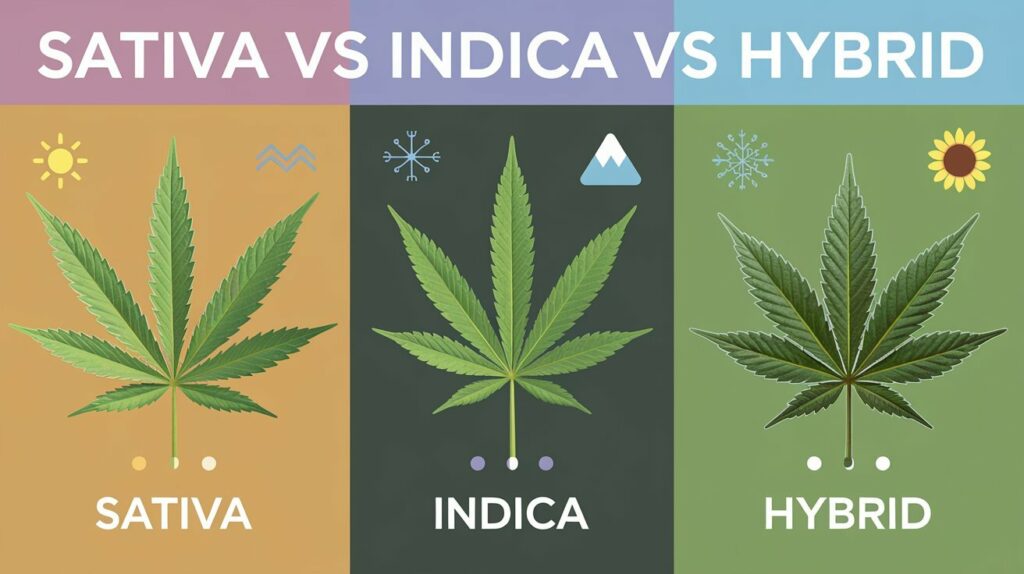
Cannabis Sativa
Originally native to equatorial regions, Cannabis sativa developed distinctive traits adapted to warm, humid climates. These plants typically grow tall and lanky, sometimes reaching heights of 12 feet or more, with narrow, finger-like leaves. The growth pattern allows for better air circulation in humid conditions, helping prevent mold. Sativa plants generally have longer flowering cycles, taking anywhere from 10-16 weeks to mature.
From a chemical perspective, Sativa varieties often contain higher ratios of THC to CBD, though this can vary significantly between specific strains. The terpene profiles frequently feature higher concentrations of limonene and pinene, contributing to their characteristic aromas.
Cannabis Indica
Cannabis indica evolved in the harsh mountain environments of the Hindu Kush region, developing quite different characteristics from its Sativa cousins. These plants are typically shorter and bushier, rarely growing taller than 6 feet, with broader, darker leaves. This compact growth pattern helped them survive strong winds and maximize light absorption during shorter growing seasons. Indica plants usually have shorter flowering cycles of 8-12 weeks.
The chemical composition of Indica varieties often shows higher CBD content relative to THC, though again, this varies by strain. Their terpene profiles frequently include higher levels of myrcene and linalool, creating distinct aromatic properties.
Hybrid Varieties
Modern cannabis cultivation has led to countless hybrid varieties, combining traits from both Sativa and Indica lineages. These hybrids allow growers to select for specific characteristics like growth pattern, flowering time, cannabinoid ratios, and terpene profiles. Many popular modern strains are actually hybrids, even if they’re marketed as purely Sativa or Indica.
The Science Behind the Differences
Recent botanical research suggests that the traditional Sativa-Indica dichotomy may be too simplistic. The effects of different cannabis varieties appear to be determined more by their specific cannabinoid and terpene profiles than by their classification as Sativa or Indica. These chemical profiles can vary significantly even within the same genetic lineage based on growing conditions and phenotype expression.
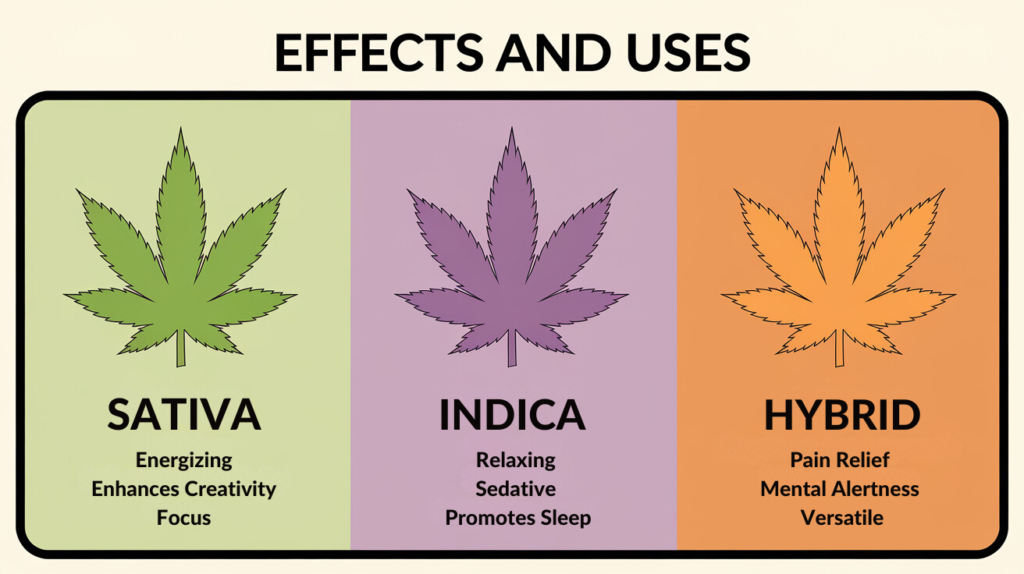
Modern Understanding
Today, scientists recommend focusing on the specific chemical composition of individual strains rather than relying solely on the Sativa-Indica classification. This includes understanding the ratios of various cannabinoids (THC, CBD, CBN, etc.) and the presence of different terpenes, which together create what’s known as the “entourage effect.”
The medicinal and agricultural communities are increasingly moving toward more precise classification systems based on chemotypes (chemical composition) and genotypes (genetic makeup) rather than traditional morphological categories. This allows for more accurate prediction of effects and more precise breeding programs.
Understanding these distinctions helps both cultivators and consumers make more informed decisions about different cannabis varieties. However, it’s important to note that individual responses can vary significantly, and consultation with healthcare professionals is advisable for medical applications.
Leave a Reply